
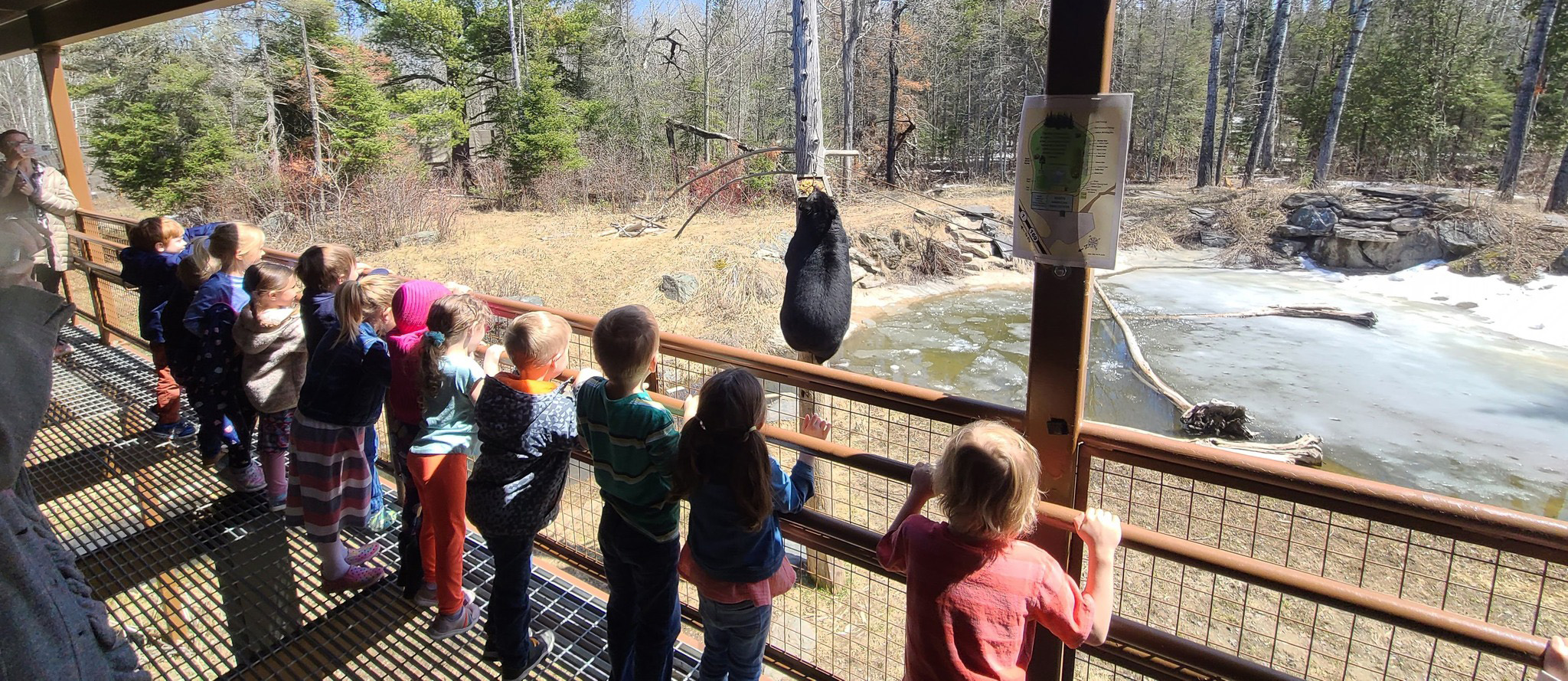
Bear News – October 16th 2026
October 16th Bear news- How do Bears Survive Hibernation? The difference between white fat and brown fat, and bear weights. This is the last bear news of the season!
Recent bear weights:
Lucky- 458lbs
Holly- 319lbs
Tasha- 342lbs
Hibernation isn’t just “sleeping through winter.” It’s a finely tuned physiological wonder— it’s a balance of slowed systems, specialized fat stores, and seasonal behaviors that allow bears to thrive in northern woods. During hibernation the metabolism of bears is low, allowing them to conserve energy to survive. Their heartbeat and breathing rates slow down and their body temperature drops. This is why hyperphagia is so important to bears and why good food years and bad food years make a difference.
Bears’ breathing drops from 6-10 breaths per minute to 1 breath every 45 seconds. Their resting heart rate drops from 40-50 beats per minute to 8-21 beats per minute. Their normal body temperature is 99-100 degrees F but may drop as low as 89 F during hibernation. Anything lower may cause death.
The color of the body fat makes the difference in hibernation. White fat provides the energy to keep them alive while they hibernate. The brown fat allows them to wake up properly from year to year.
Brown fat is unique to mammals and it activates during the cold weather to keep the mammal from shivering. White fat acts as the primary source of fuel to keep organs from over working. Bears can lose 25% to 40% of their body weight by strictly burning fats.
The term (BAT) refers to brown adipose tissue and (WAT) white adipose tissue. To break it down a little further, white fat acts as a fuel tank. It stores large fat inside cells and suupplies slow, steady energy for basic body functions over months of fasting. The brown fat acts as a body heater. It contains power centers that make it look brown. Brown fat quickly creates heat during waking periods without needing to shiver. Shivering is a way to expend heat for the body.
There is another factor that fits into the bear’s hyperphagia phase. All foods serve as energy. The triglycerides serve as a primary energy reserve for the body’s excess calories. In bears there is no excess calorie, everything is used as a fat reserve for waking hours or hibernation.
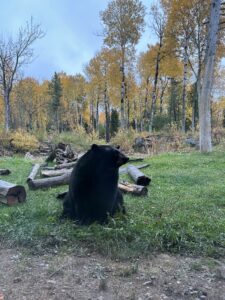
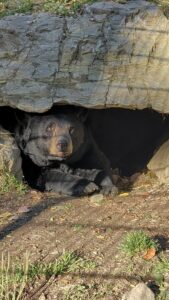
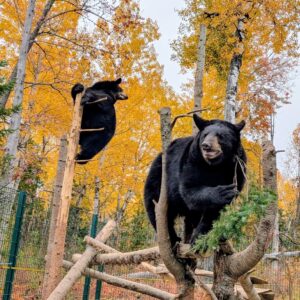
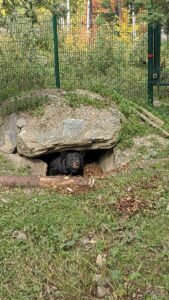
Holly is currently sticking close to Den 3. She raked in her straw, made a nice bed and only comes out during the BTS’s for food and a drink of water.
Tasha isn’t showing any sign of denning. In fact, she is the only adult bear huffing at the cubs and doing an occasional bluff at their fence. The cubs are on high alert when she is out. We’re pretty sure its due to the cubs getting their breakfast before she gets hers.
Lucky is showing mild interest in the cubs. He can see them when he sits on Den 2. He first walked around them going to the viewing area through the woods. Now he does walk on the bear path but generates little reaction from the cubs. The cubs do watch him and Lucky watches them from a distance. He has only bluff charged them twice.
It is important for our staff to give our adult bears attention too. Target training and enrichment are good ways to give them attention.
Please remember our needs and please look at our amazon wishlist. We always need cranberries, pecan pieces, and dried blueberries . https://bear.org/support-us/
Thank-you for all you do,
Sharon Herrell, Sr. Bear Keeper
We are a 501(c)(3) non-profit that relies entirely on the support of visitors, merchandise sales and people like you. We do not receive any state or federal funding.
Help support our mission.
Donate Now